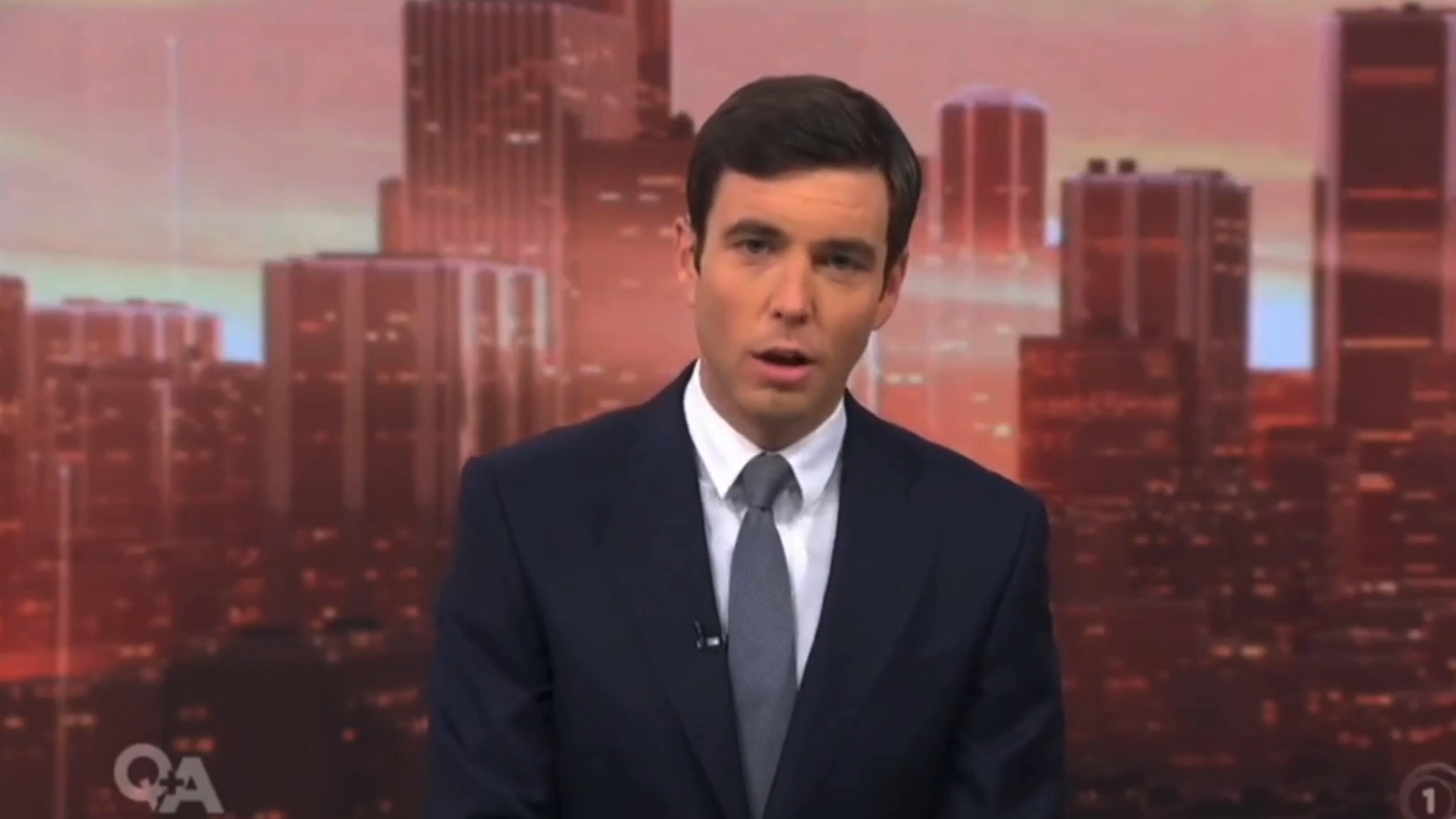
GCSB & NZSIS warn ACT Bill risks NZ's National Security
Judith Collins was briefed in March 2025 that David Seymour and Bryce Wilkinson's proposal is incompatible with safeguarding the country from espionage, sabotage and terrorism.
As outlined earlier in the week, RNZ has a charter to “serve the public interest” - not pretend it is centrist, shy, or bipartisan.
This week, during the Regulatory Standards Bill select committee, the dominance of corporate media and RNZ government inteference could not be clearer.
As heavy hitter after heavy hitter, and expert after expert, outlined clear reasons why ACT’s bill is a detriment to good law making, democratic norms, public health, and collective and environmental interests, Stuff ran numerous articles about Golriz Ghahraman, Jacinda Ardern, and Kiri Allen to attract attention.
NZ Herald, after its successful Steve Joyce - James Grenon Board takeover bid, ran a similar profile.
One would think there really isn’t too much to cover, nothing of real prominence or import to kiwis.
Well how about NZ’s spy agencies warning our government that ACT’s Regulatory Standards Bill being incompatible with with safeguarding the country from espionage, sabotage and terrorism?
How about Judith Collins, Defence Minister, being briefed on this specific matter on 24 March 2025?
The NZ Council of Civil Liberties made an outstanding submission to the Regulatory Standards Bill Select Committee yesterday, which covers this topic.
You won’t read about it on the front page of NZME or Stuff, nor will it be accompanied with appropriate attention grabbing headlines or the Mike Hosking treatment.
I offer the transcript below - and it’s also on the video above for those of you who prefer to watch:
….In watching the submissions over the last couple of days, I have not heard any questions from any New Zealand First members.
And I wanted to ask if New Zealand First members have been present during committee sessions on a bill that they are committed to passing.
If they've not been present, I think that's quite shocking because they're committed to passing a bill and the bill does violence to our constitution and lawmaking.
And this absence is doing damage to our democracy.
We trust that members of the committee have read our written submissions, so I will not spend much time recapping that.
In brief, the Council opposes the bill and does not believe it should pass.
The bill's definition of liberties in clause 8 is deeply flawed.
The bill elevates property rights above other human rights, and this is at the core of its danger to our country, and the Regulatory Standards Board is a nexus for corruption.
While I've listened to many of the oral submissions made on the bill yesterday and today, I've not heard them all.
But amongst the submissions I did hear, one serious issue that was not mentioned is something the council wants to bring to the committee's attention.
Two agencies the Council is not often likely to promote the concerns of are the Security Intelligence Service (SIS) and the Government Communications Security Bureau (GCSB).
We are doing so today because their concerns about this bill echo ours in two ways.
First, the way the bill's narrow principles and certifying process will chill policy options that do not align with the principles.
And second, the risks created by the Regulatory Standards Board.
The intelligence agency's concerns were set out in emails and briefings to their minister,J udith Collins, that were disclosed under the OIA and reported in the Post last Wednesday.
First, in relation to how the clause eight principles create risk.
The Clause 8 principles and the requirements for justifying departure from them will chill free and frank advice on policy options where it is easy to show the costs but hard to quantify the benefits.
National and New Zealand first MPs are going to want to consider what the intelligence agencies told their minister on 24th of March this year.
elements.
And I quote,
“The proposed principles and focus of the Bill are not suited to recognise the need for legislation with a national security purpose or incorporating national security elements.
Under the proposed construct, it will be challenging to quantify the benefits of national security related elements in order to compare them to more easily quantifiable financial costs.
This may make it more challenging to ensure that appropriate consideration is given to national security issues in the development and review of regulation.
The agencies consider that a focus on whether regulatory systems are able to achieve their intended purpose would be more appropriate.
While the bill proposes a mechanism whereby responsible chief executives would be able to explain where proposed bill or existing legislation is inconsistent with the principles, this would likely make it more challenging to justify regulation that sought to achieve outcomes such as national security that is not easily quantifiable.”
Let me make that very clear for members.
The GCSB and SIS have said to ministers that this bill is a risk to national security.
Do National and New Zealand first MPs want to put New Zealand's national security at risk?
Do they want to see policy and legal proposals quashed in the early stages because of the chilling effect of clause eight and clause nine?
The intelligence agencies provided a practical example of the risks the bill creates, saying it has significant implications across the public service and has the potential to cause:
“Delays to improvements to other national security legislation as the resourcing of other agencies, for example, DPMC or the Ministry of Justice, may be prioritised to meet the expectations of the bill at the expense of other legislative work programmes….”
“The Ministry of Justice has just begun its review of the Terrorism Suppression Act, which could be deprioritised in response to the proposals.”
The second area where the GCSB and SIS raise concerns that happen to align with the Council's is in relation to the Regulatory Standards Board.
In the concluding paragraph of our written submission, the Council said that the proposed Regulatory Standards Board is a glaring nexus for corruption and lobbying by vested interests.
The committee heard yesterday from Professor Boyd Swinburne of Health Coalition Aotearoa about tobacco multinationals trying to block regulation in Australia.
One of the biggest threats to good policymaking is the capture or swaying of policy development by people or organisations who work to ensure that they or their clients' interests are prioritised in policy and legislative design over and above the interests of the environment or the welfare of people.
Large companies with significant resources are more likely to be successful in these efforts to influence lawmaking than the country's small and medium enterprises, let alone small NGOs or community groups.
As we've seen from Radio New Zealand reporting about the cosy relations between the alcohol industry and a manager in the Ministry of Health, these lobbying efforts are often successful in corrupting policy making that should be reducing harm and improving health.
In creating the Regulatory Standards Board, the bill sets up another massive target for big corporates to lobby for regulation that benefits them or for removing regulation they do not like.
It's also an incentive for corruption in the form of donations to political parties in return for a place on the board or for a particular piece of regulation to be recommended by the board to be scrapped or not approved.
In their March 2025 briefing to Minister Collins, the SIS and GCSB said this about the Regulatory Standards Board.
“Given the proposed role of the Regulatory Standards Board, we consider there would be value in national security screening of members to ensure that they are not susceptible to foreign interference.
This is particularly relevant as foreign states are likely to have a strong interest in how New Zealand's regulatory environment seeks to manage national security threats.”
In other words, the intelligence agencies have identified the board as being a target for capture by foreign interests.
The agencies are saying that the Board too is a risk to New Zealand's national security.
Will National and New Zealand first MPs be relaxed when foreign companies, which would not be classed as a foreign power under the Crimes Countering Foreign Interference Bill, currently in front of the House, interfere with our regulatory processes?
In short, the NZSIS and GCSB have said this bill is a risk to New Zealand's national security.
The Council agrees with their analysis.
This bill is a risk to New Zealand's security as a nation.
As such, voting for this bill in its current form, particularly with the Regulatory Standards Board, is frankly unpatriotic.
This bill does violence to our constitution and norms of lawmaking.
If passed in its present form, it will do violence to policymaking and regulating.
It will enable harm to people and to the environment and to society.
It is dangerous to our country and to our democracy.
It is an unpatriotic bill that is a risk to national security,
according to our intelligence agencies.
If National and New Zealand first MPs do not have the courage to walk away from their coalition agreement on this bill, they should weaken this bill substantially.
Sound of Silence
One of the things I’ve been reflecting on is the clear sound of silence under a right wing government.
Despite some of the most egregious, damaging and dangerous actions we’ve seen1 the echo in corporate media and right wing commentators is near silence - or alternatively, pure distraction.2
The NZ Council of Civil Liberties, an excellent organisation worthy of support, has made it clear - the bill is an affront to our national interests and the gradual erosion of our democracy.
It happened elsewhere - and it’s happening now in Aotearoa New Zealand.
And the sound of silence from media is not only deafening, it’s destructive.
It’s also intentional.
The parallels with the US playbook couldn’t be clearer, and I hope you and others share information wherever you can, because the big money certainly won’t - nor will this sitting Coalition government.

Fast-track, seabed mining, live exports returned, policies that hurt and harm disabled, unemployed, the poorest, Maori, actively removing Te Tiriti o Waitangi/Treaty of Waitangi by stealth through laws without consultation, privatising healthcare, starving public health, claiming there is no money for public services while giving away hundreds of millions to tobacco companies, disallowing camera footage to be viewed on commercial boats, reneging on climate commitments, implementing policies that actively increase emissions, allowing fresh water contamination, implementing speed limits that have been known to kill children, attacking and threatening journalism and journalists etc. ↩
I alluded to it in an earlier post called “I’m glad the right wing coalition government won”. ↩