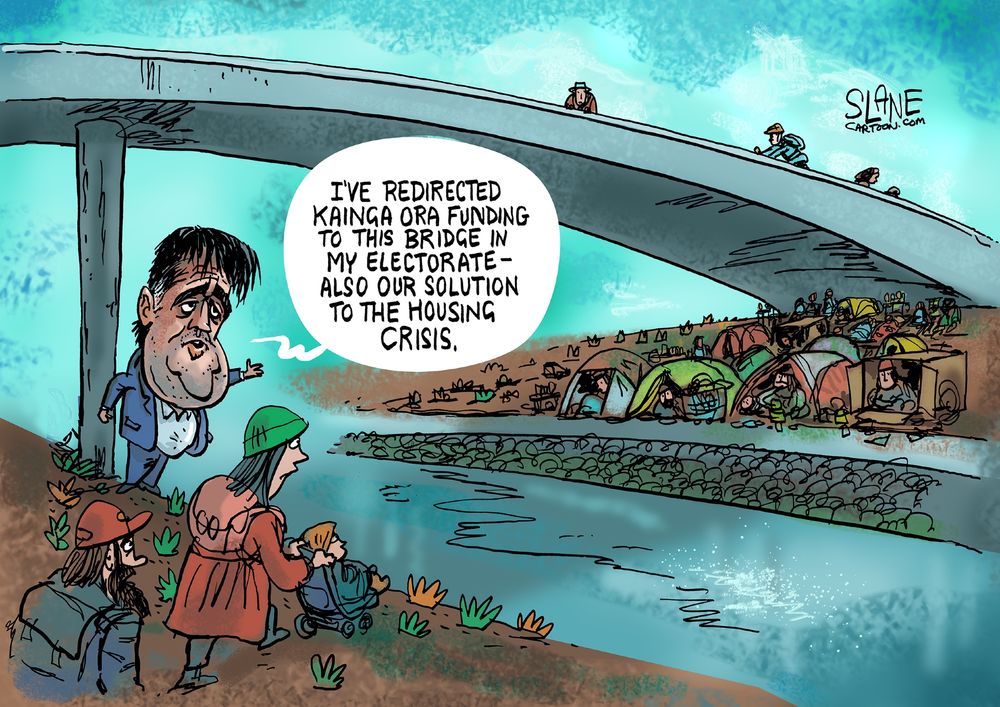
National paves way to criminalise begging, homelessness and protests
Homelessness has doubled under the National Party, meth use has gone up 300% & police/mental health resources cut around NZ. Pleas by charities over the last 1.5 years have also fallen on deaf ears

There are now well over 113,000 homeless in Aotearoa New Zealand, including children living in cars and sheds.
Homelessness is up across the entire country from Whangarei to Christchurch to Nelson down to Invercagill.
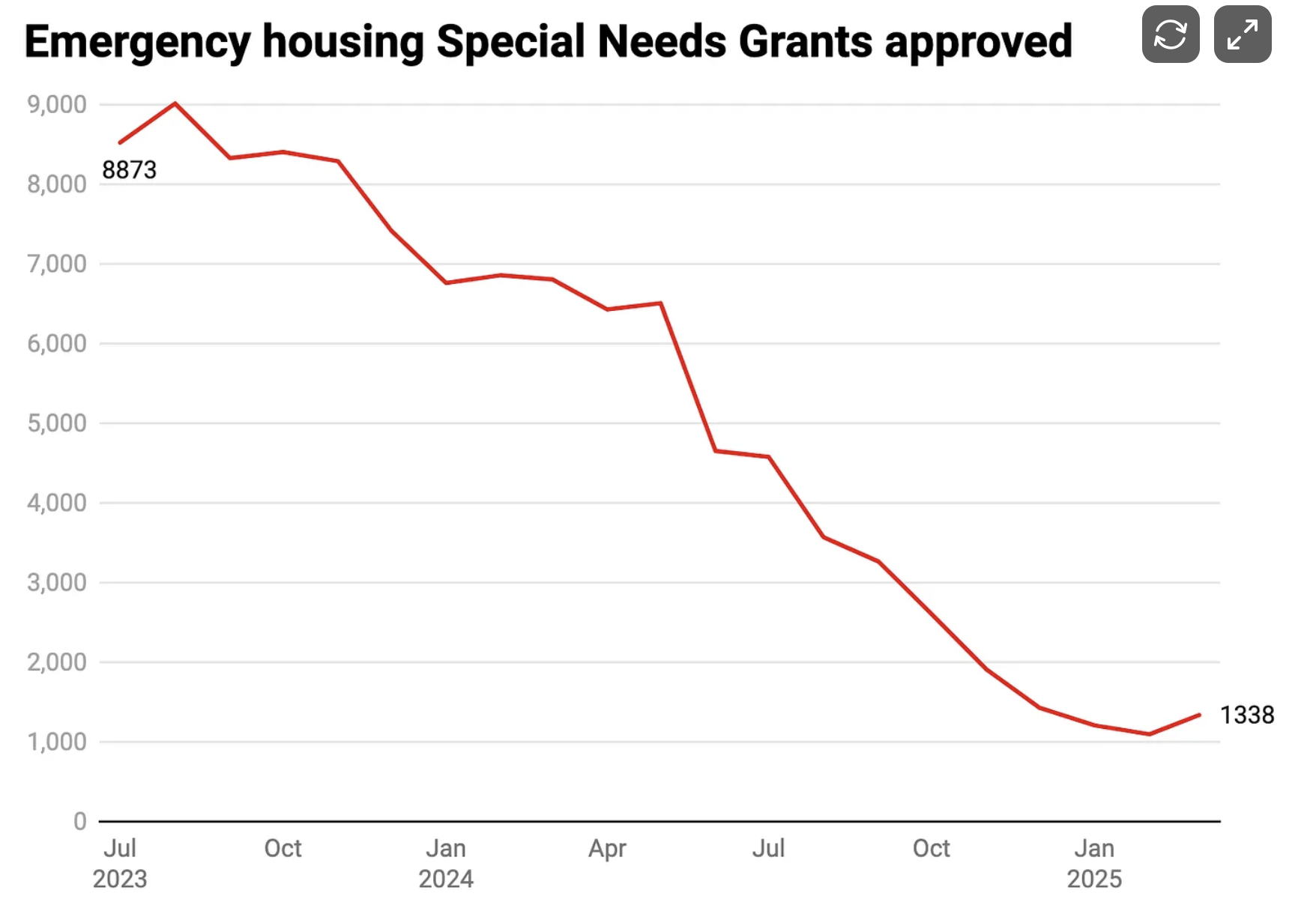
In Auckland, Councillors say this government reduced social housing accommodation from 890 places to 39 in one year, then cut emergency housing grants by 70-80% ($20 million), resulting in individuals rough sleeping in Auckland up 100%.
Charities, councils nationwide, and public service agencies warn that National’s policies are harming communities.
Tamariki, youth, women and domestic violence victims are finding themselves more and more at risk, and homeless, even as mental health funding is cut too.
Suicide rates are up from last year, with Maori disproportionately affected.
Kiwisaver hardship value withdrawals are doubling to a record half a billion dollars plus.
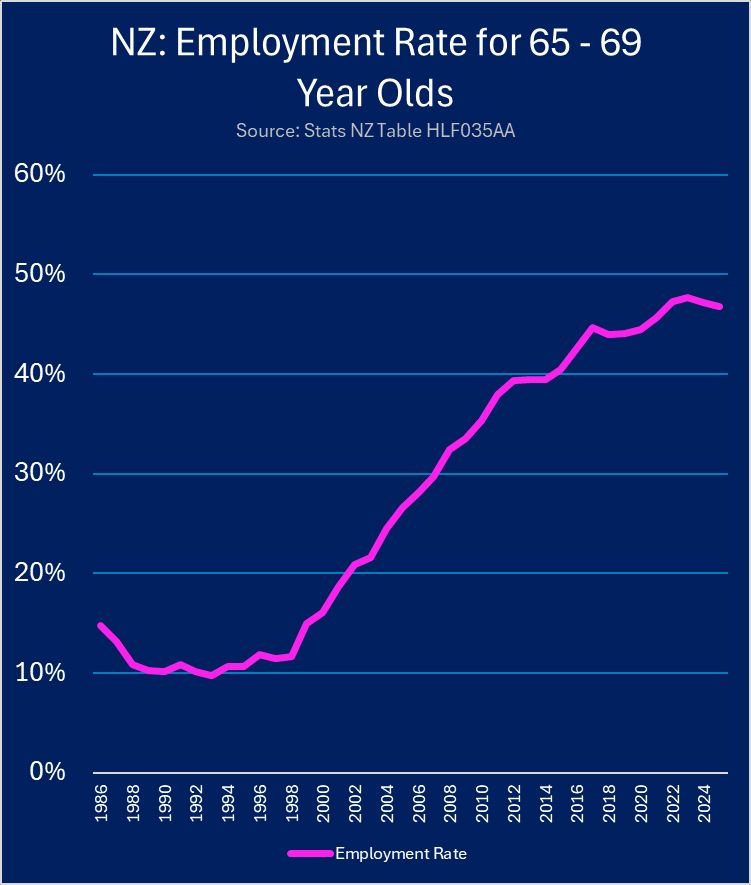
The cost of living continues to hit middle and low income New Zealand, small businesses, and the elderly and young, the most with many elder Kiwis compelled to work
National is nothing but relentless, slashing funding for foodbanks, Lifelife Aotearoa, and cutting Auckland’s suicide support unit Segar House - not even bothering with consultation initially.
A year ago, Luxon celebrated falls in emergency housing numbers, as homelessness increased ~60% in Auckland. It’s now up double.
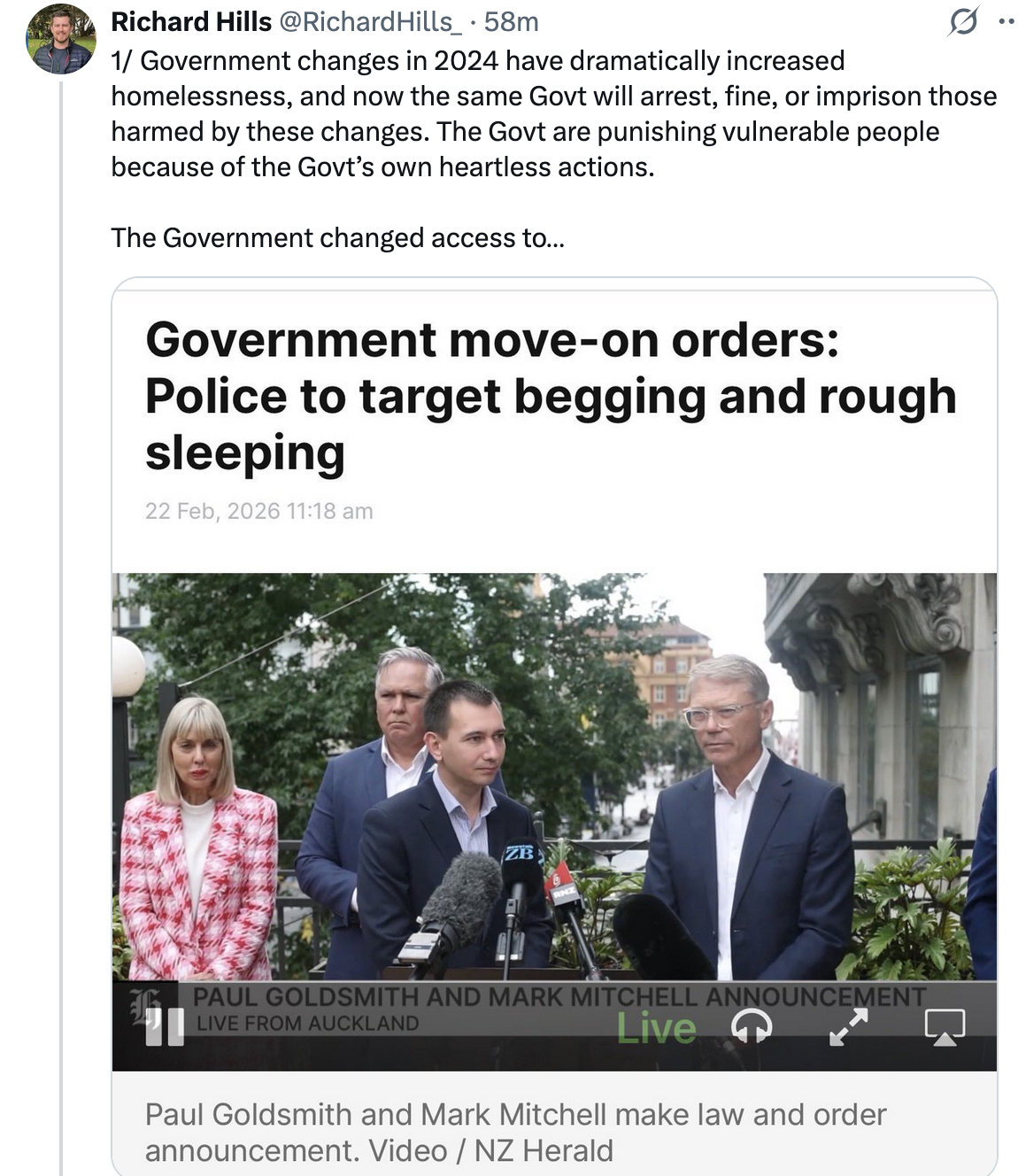
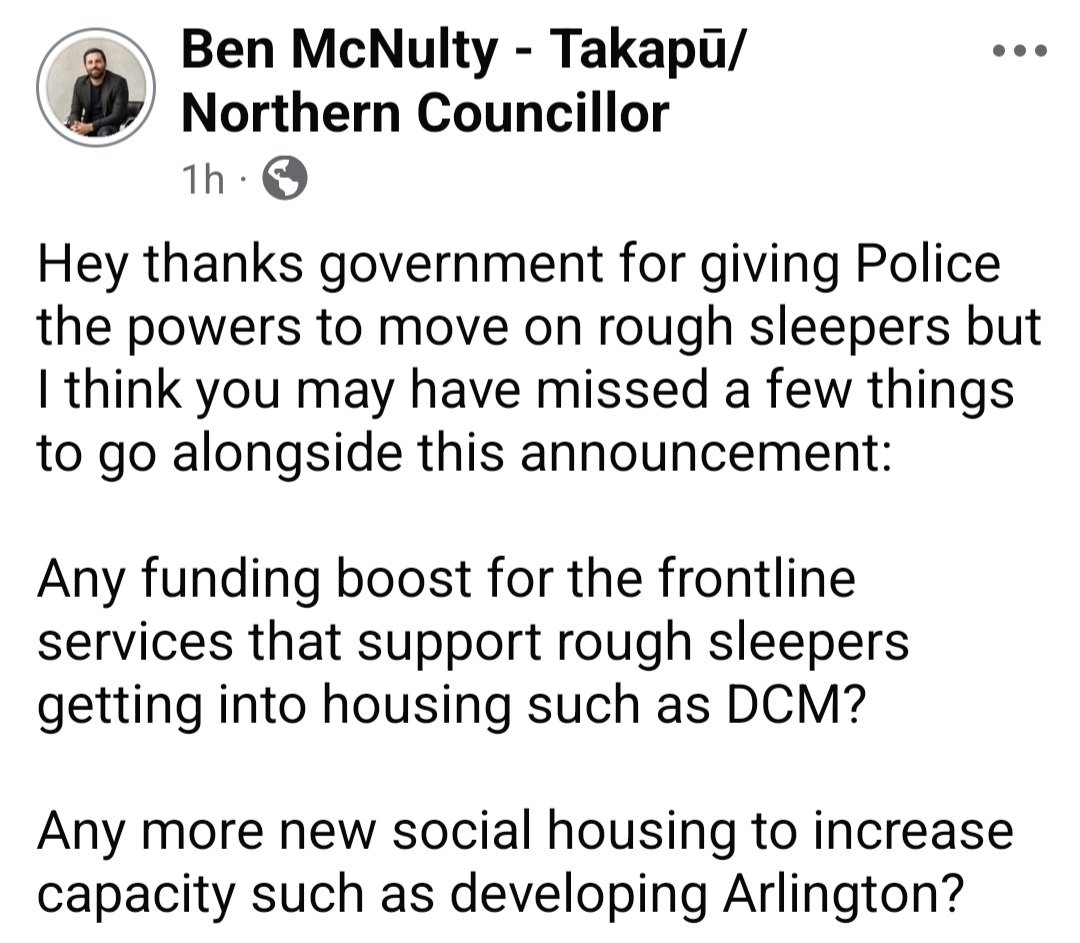
So it is no surprise to see National today announce its policy of effectively criminalising begging, homelessness, and what they call public disorder - which can include protests.
The discretion is being given to police, who are overstretched and underfunded and which already had mental health support dropped from their responsibilities.
Mark Mitchell recognises this in the statement below.
RNZ:
The government will amend the Summary Offences Act to give police the power to issue move-on orders to people who are displaying disorderly, disruptive, threatening, or intimidating behaviour.
They will also apply to people who are obstructing or impeding someone entering a business, breaching the peace, begging, rough sleeping, or displaying behaviour indicating an attempt to inhabit a public place.
And
Mark Mitchell’s office expressing a reluctance for police to lead a homelessness response in Auckland’s CBD.
In the email, dated 5 November, a staff member said: “Feel it is important just to flag that Minister Mitchell does not believe that police has a leadership role in this and has in the past ended up picking up the work of other agencies, which stretches their resources in other areas.”
The staffer said police “obviously” had powers that others did not, and would assist, but Mitchell was “very keen to disabuse anyone of the notion that Police will lead a response to homelessness.”
Despite this, Mitchell fronted up at the joint Simeon Brown, Viv Beck (CEO of Heart of the City, Auckland Business Group), Paul Goldsmith and Mark Mitchell press conference today to laud National’s new policy of asking police to lead the response to homelessness.
Penalties for breaching any “move on orders” will be fines of up to $2000 and/or imprisonment of up to 3 months.
Based on the imprisonment cost of $562 a day, National are offering to fund the homeless or protestors with $50,000 of taxpayer funded accommodation.
And where will they go?
According to Goldsmith, this isn’t his problem.
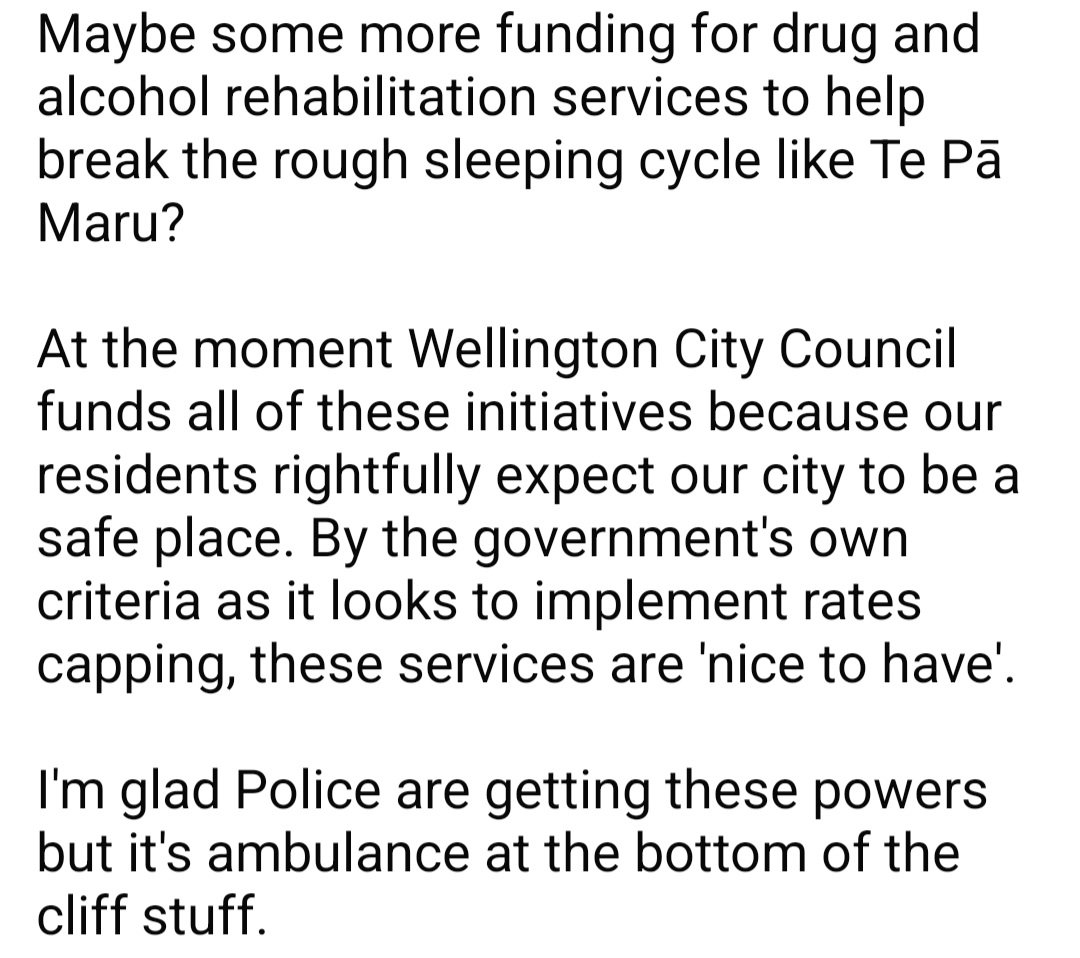
It will be at the discretion of police as to if the relevant persons get any support, and there is no real support to go to.
Charities have been pleading for help while National have cut social housing and thousands of state home builds, while underfunding mental health and ignoring 30% + public mental health vacancies.
But there is one beneficiary perhaps:
National’s new multinational PPP mega-prison that experts say will harden crime & recruit gangs is up and running. It has helped to boost NZ’s record prisoner numbers and record gang numbers - both on National’s watch. NZ already has some of the highest imprisonment rates in the OECD but it costs us socially, generationally, and financially.
Out of sight, out of mind is the strategy though, it appears.
Councillors Respond
Cartoon