
Taxpayers Union Pressuring Local Council Candidates Around NZ
Can I ask you to share the news? Article open to all.
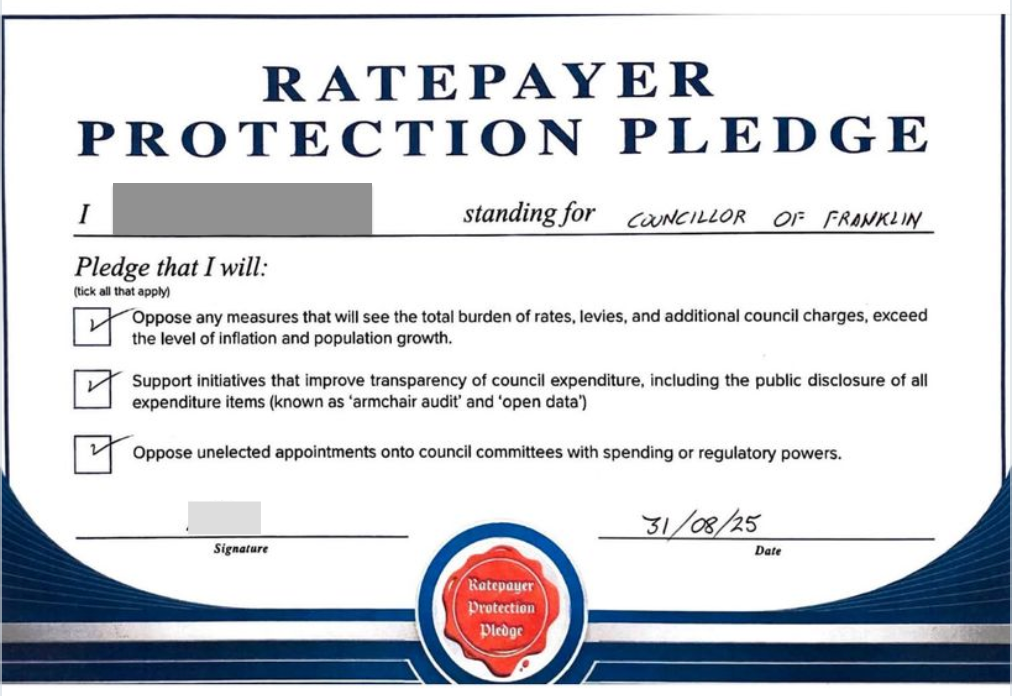
Please let your local councillors, voters & press know that what Taxpayers Union is doing in local elections is potentially very dangerous to our democratic norms and elections. That is my conviction.
Simms said in the past week he had been asked 17 times to sign it, "with an increasingly urgent tone &unsubstantiated claims that the majority of voters are in support"
Otago Daily Times
It’s a very nefarious game, in my view, too - with what I believe to be specific goals in mind i.e. local control, privatisation of local assets, and synchronising with National Party/ACT policy
While I found some letters around the web for my article yesterday, most Kiwis remain unaware.
It took me a while to source from social media so I am also very grateful to ODT for covering this in the South Island.
Here’s another one - this time from a council candidate who has chosen to ally with the TPU.
This is my first formal ask to spread an article, and I ask that you find ways to do so - especially if our wider media won’t do it.
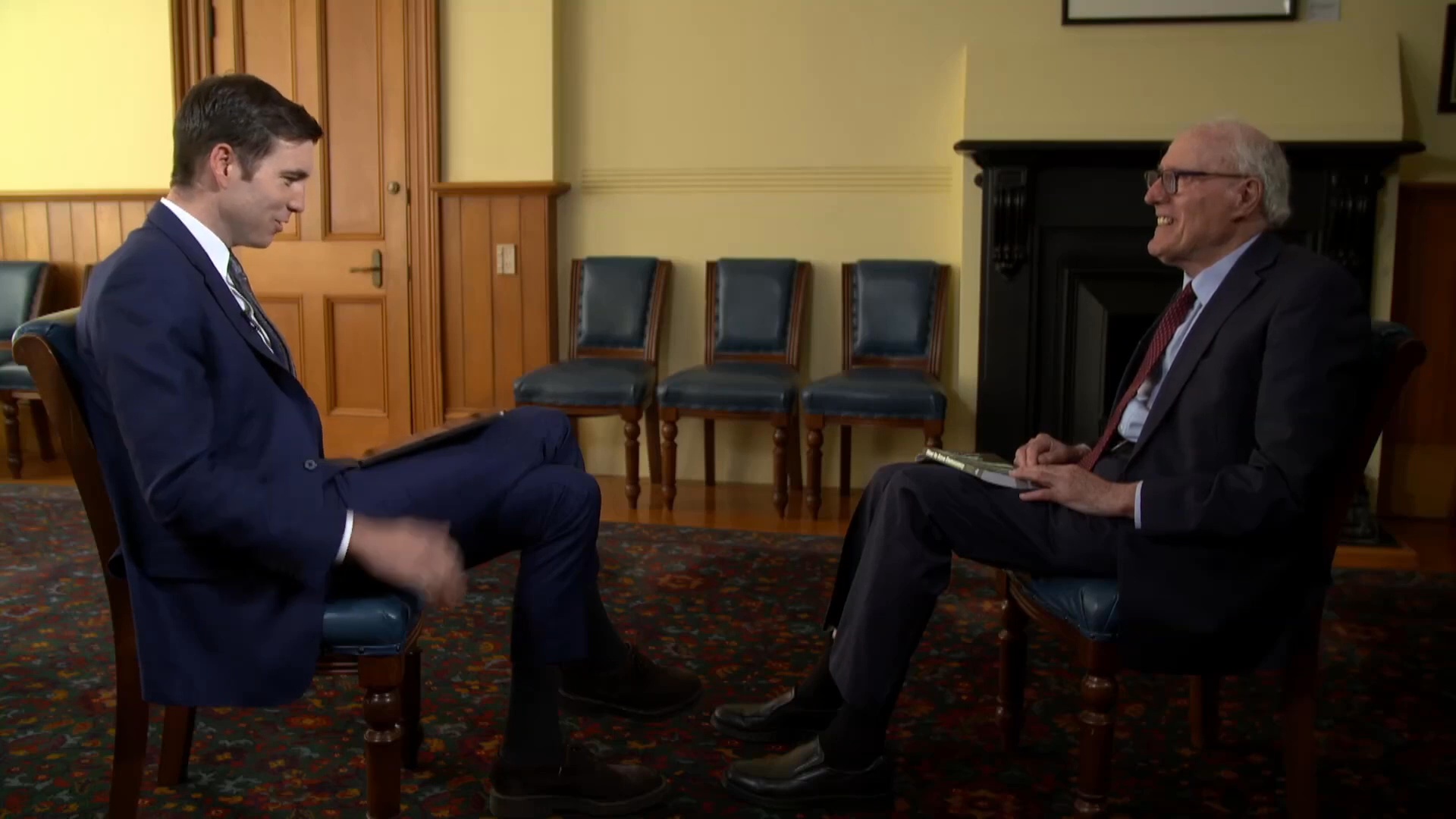
Sir Geoffrey Palmer, NZ’s foremost constitutional expert and former Prime Minister, is spot on in the video above.
Our risk as a country and peoples is populism, impatience, not understanding nuance/complexity, and not recognising the very stark dangers the country and Kiwis face in a fast slip to kleptocracy and even fascism.
“If you don't have authentic democracy in your institutions and people don't trust it, you're on the road to perdition….I do think you've got to take precautions before it happens, because democracy is a very fragile form of government.”
Sir Geofrey Palmer
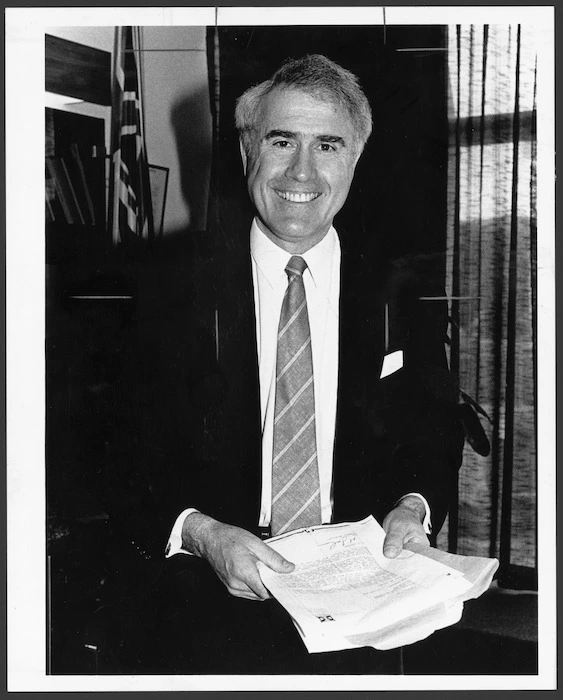
Other recent articles by Sir Geoffrey Palmer
- ‘Sounding the bugles of democratic retreat’
- Democracy falls out of favour
- Lurching towards constitutional impropriety
- Why the Regulatory Standards Bill is dangerous to New Zealand’s democracy
Please do try to share if you can
Thanks folks,
Tūī
Thanks for reading! This post is public so feel free to share it.
Transcript of Sir Geoffrey Palmer Interview related to excerpt above (to 12:15)
JT: Sir Geoffrey, tēnā koe.Welcome to Q&A and thank you for your time.
GP: Tēnā koe and thank you for coming all the way from Auckland to talk to me.
JT: I want to begin with a quote from the book.
“Bad times seem to be afflicting the world again as they were in the 1930s.
So how do you compare that time with what we are experiencing globally today?”
GP: Well when I was a student at the University of Chicago Law School I had a class from Hannah Arendt, who is an expert in what I would call dictatorship and autocracy.
And she wrote a book called The Human Condition, saying that everyone had a moral duty because humans were rational, that they should try and make the world a better place.
And she, of course, had to go to the United States because of Hitler's Germany.
And in many ways we're back to something like that when fascism, Mussolini and Hitler came to Europe.
We got autocracy and we got fascism.
Now, we're not in that state yet, but you've got to be very careful that you make democracy robust.
And democracy around the world is under challenge almost everywhere.
Cambridge University did a wonderful study saying that democracy is disappearing. There are fewer democracies now than there used to be.
I've got an enormous library of books which say that, how democracy dies.
And what worries me about the international system is that the rules-based system of international law is now dead.
New Zealand has relied on that always, and now it's in a state of collapse.
If you've got a permanent member of the Security Council fighting Ukraine,
You know, it's just outrageous.
And so we have to say that in a small country like New Zealand, we rely on a rules-based system.
And the only thing you can do if you want to look at the big picture is say, gosh, we don't want any of those sorts of things happening here.
So what we want to do is to make sure that we make our democracy as robust as it can be.
Now, we are not in the same difficulty that many other countries are in in this regard. I mean, there are a whole lot of countries that are just terrible dictatorships.
And the characteristics of autocracy is chaos.
That's what you get from it.
And what you get is greed with people taking all the money from the government and diverting it to themselves. and they are strong men, usually, and they are corrupt, and they involve, and it's a kleptocracy to some extent, dictatorships, and it's a system of government.
And that system of government is very hard to change because they use propaganda.
They are good students of Dr Goebbels, who was a propaganda expert.
And so you get a system where Democracy is not fashionable.
People want better out of their governments, and they get impatient about it, and they want something better. But the problem is that if you go to populist authoritarianism, you're going to be a whole lot worse off.
And my whole conviction in writing this book was to ensure that New Zealand's democracy was made as robust as it could be so that it could withstand these terrible international tendencies that have come upon us.
JT: It's your contention that increasingly people in developed democracies are dissatisfied with democracy.
GP: That's true. There's plenty of evidence of that. Decay and rot set in in democracies. And if it's not addressed, then it gets worse.
And that's what allows populism to take over and authoritarianism to flourish.
And I don't think that will happen here, but I have, there's a very good book, and it's now just in its second edition, I contributed to it, about the crisis in democracies…
All around the world where you've got democracies, they're all suffering this sort of criticism.
And we're not alone, and we're actually not in bad shape compared with most of them, but I wouldn't want us to get into bad shape.
JT: So why do you think people are dissatisfied with democracies?
GP: Well, because I think when their standard of living falls and they find economic hardship comes upon them, they've got to find someone to blame and they think the government's responsible.
It's very difficult for governments to keep the economy in a state of prosperity all the time when the economic cycles come and go.
And so, you know, impatience is a real problem.
JT: So you say that the erosion of democracy is not just a problem internationally, that we are experiencing it here in New Zealand.
One of your central criticisms is the erosion of parliamentary processes. So successive governments have increased the use of urgency in passing legislation.
Urgency has been used by this government a lot, not only to repeal laws passed under the previous government, but also to pass new legislation.
So what do you make of the use of urgency?
GP: Well, I think urgency is...When you take urgency, you're taking away the ordinary processes that are laid down in the standing orders for processing legislation.
And if you want to process a great deal of legislation, the Parliament's not sitting enough to deal with it. The Auditor General a few years ago criticised the government for producing too much legislation and Parliamentary Council didn't have time to draft it properly.
It's a highly skilled job drafting legislation.
And so if you force stuff through the parliament and you want to do it at speed every 100 days, you're going to have a serious set of problems.
And the problems you're going to have is that you will need to use urgency a lot.
And urgency isn't a one-party problem.
All governments have used urgency, and most of them have used too much of it too much of the time. Because it abridges the democratic checks and balances that ensure that legislation is properly considered and consulted with by the public.
Now, you come to the select committee system. We have got 123 MPs. We have got cabinet of an executive branch of 30 people.We've got 20 ministers in cabinet.
We've got eight ministers outside cabinet. We've got under secretaries. We've got a pretty heavy Executive.
I've characterized New Zealand as being an executive dictatorship. It's been that way always because the number of MPs we have is quite small.
If you look at international comparisons, you will find that the island has 33,000 people produce one MP.
New Zealand 43,000.
In all the Scandinavian countries it's less than here.
And I have to say something that will be very unpopular.
MPs are grossly overworked.
It is a very big system of government we have to keep it properly working you have to have accountability. In the UK the House of Commons has 650 members and I was lucky enough when I was younger when I was deputy Leader of the opposition to be given a scholarship to go to to the House of Commons and I studied it for two weeks and what I found was that the government and opposition were equally critical of the government's proposals [at the time]
There was real accountability.
In a parliament that size, the executive is truly accountable.
In a parliament of our size, the executive is in charge and everyone wants to be a member of the executive and they don't really want to question their own side.
And that's the difference in a small parliament.
I know it's unpopular, the public don't like politicians, but the trouble is the parliament is going down in public estimation.
And the reason it's going down is that people don't trust it.
And if you don't have authentic democracy in your institutions and people don't trust it, you're on the road to perdition. And we don't want that here.
I don't think we're there or anything like it, but I do think you've got to take precautions before it happens, because democracy is a very fragile form of government.
It slips and slides away without people noticing.
And if you look at our select committee systems, I've been going to select committees lately,
You get five minutes. I wrote 28 pages and got five minutes.
Now, I've just made a massive submission to the Standing Orders Committee about what they can do to ensure that the Select Committee system actually scrutinise.
People don't understand the Cabinet is not in charge of everything. The Parliament is in charge of everything.
And the cabinet ought not to be sort of telling the select committees what to do.
JT: So if you look at that select committee process, I mean, so many submissions are now put through special interest groups who do copy and paste jobs or maybe use AI to help draft their things.
As you mentioned, questioning is often pretty shallow in the select committee process. And I think parties of all sides of the political spectrum often either support or oppose legislation by referencing the percentage of submissions which either support or oppose the proposition.
GP: I agree with you.
JT: And use that as a sort of proxy for public support. So what would you recommend changing in that Select Committee process?
GP: I think you've got to get to the substance. Scrutiny is about what is being proposed, what are the arguments in favour of it, what are the arguments against it, and often they're quite complex and intricate, and you can't handle them in five minutes.
I remember as a backbench MP when I first got to Parliament, cross-examining one witness for an hour about the National Development Bill.
Now you can't do that now. There's no time because there's too much legislation. We've got hyperlexis in this country.
We pass far too much law far too quickly and the question is how much of it do you need?
JT: But if people are dissatisfied with democracies, or increasingly dissatisfied with democracies, will slowing down the process make them any less dissatisfied?
GP: Well, it will if you get better policy.
The problem is that too much of the policy is not done in depth. If you want to have a proper policy, we used to have royal commissions or the law commission reports, things that are researched in depth, properly analysed, thought through, consulted with by the public and then you know where you are.
But we haven't got the patience for that now and you will not get good policy unless you do really good research and you have thought about it.
And I always think Lord Rutherford had it right about New Zealand.
I went to Nelson College and we had all these report cards in the glass case and in the front of the college and he was top in everything and when he was at Canterbury College he said
Well, in New Zealand we don't have much money, so we have to think.
Well, that'd be a good start.