Te Pāti Māori and Greens Falter
Reaction to the polls has been swift and in some corners, unforgiving
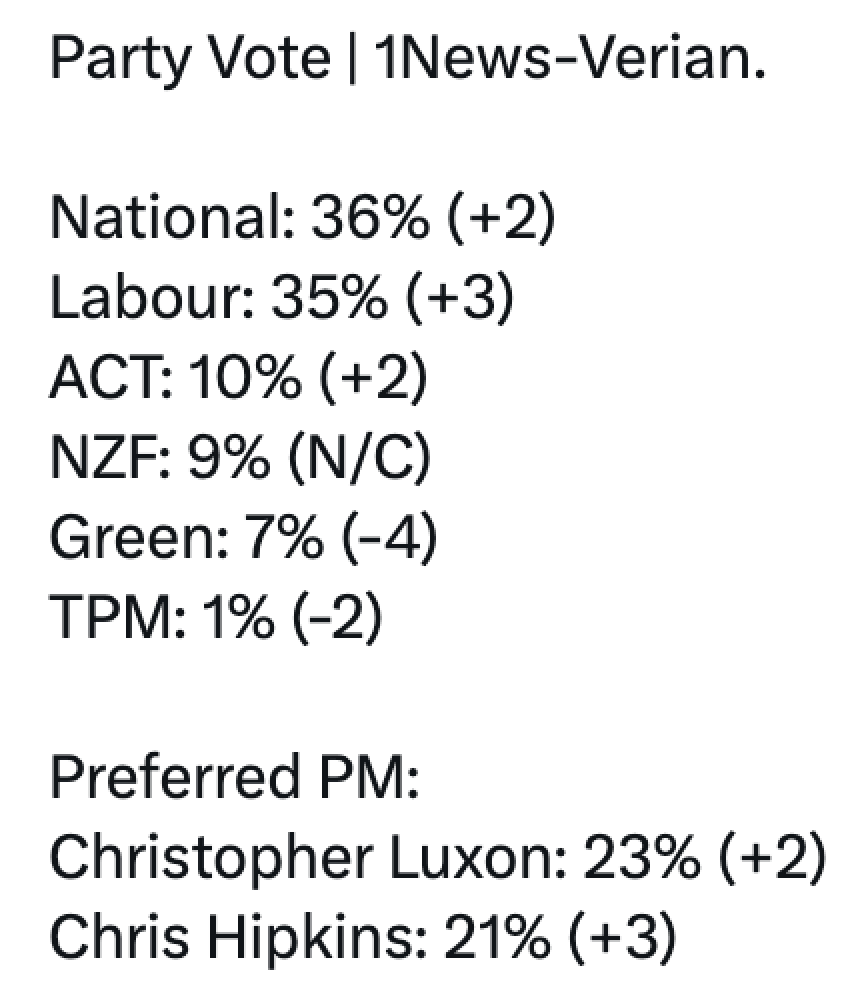
Last night’s 1News Verizon poll showed Te Pāti Māori’s support has cratered to 1% in the latest polling, in a survey taken between November 29 and December 3.
The Green Party saw its support drop 4% to 7%, falling behind both ACT and NZ First.
NZ First holds steady at 9%, and ACT gained 2% to 10%.
Te Pāti Māori clung in at just 1%, having previously hit highs of 7% just a year ago. That came after the historic national hikoi which saw record numbers of Kiwis advance on Parliament grounds, in protest of the Treaty Principles Bill.
At that time, NZ First was 6%.
And that’s just the so-called minor parties.
Labour advances steadily and strongly, up 3% to 35% while National advances solidly 2% to 34%.
Of course, polls are temporal, as-at moment-in-time events and they can and do always change, but credible1 polls are of particular interest at three junctures:
- After a major policy announcement / shift in circumstances or conditions;
- Closer to elections;
- To determine trendlines and movements in public perception
And based on this, the results aren’t wholly unexpected.
Te Pati Māori self-implosion impact
As I wrote in October, Te Pati Māori's self-implosion isn’t good. Between Tākuta Ferris’s outcries many viewed as inherently racist, thereby reflecting on his party - to his subsequent divergence with TPM leadership on the issue (the co-leaders apologies, Ferris doubled down) - to leaks about Eru Kapa-Kingi’s conduct in Parliament, to Mariameno Kapa-Kingi’s expulsion and the public internal in-fighting, Te Pati Māori turned the significant sympathy and positive momentum/alliance it had cultivated into political dust.

What’s most disappointing is that it has all been driven from within, and in hindsight, it is clear what the co-leaders were trying to head off by announcing a failed “reset” back in October, before it all came to a head.
Of course, we are still under a year out from the next election, but it’s not great, and some impressions will linger.
Even Mariameno Kapa-Kingi’s temporary reinstatement to her position by the High Court is unlikely to bear positive fruit. Once trust is broken to that extent, partnership is impossible.
Green Party Shock
Many more have been surprised by the fall in support for the Green Party and swings in support for the right wing Coalition. Many will be shocked, but I was not.
NZ First are steady, but are on a significant trendline of 9-10% over many polls now. Peters’ populism, like Nigel Farage in the UK, is politically effectual. Under the Luxon government, Winston enjoys a brand of uninhibited freedom and political stardom he has assumedly long craved.
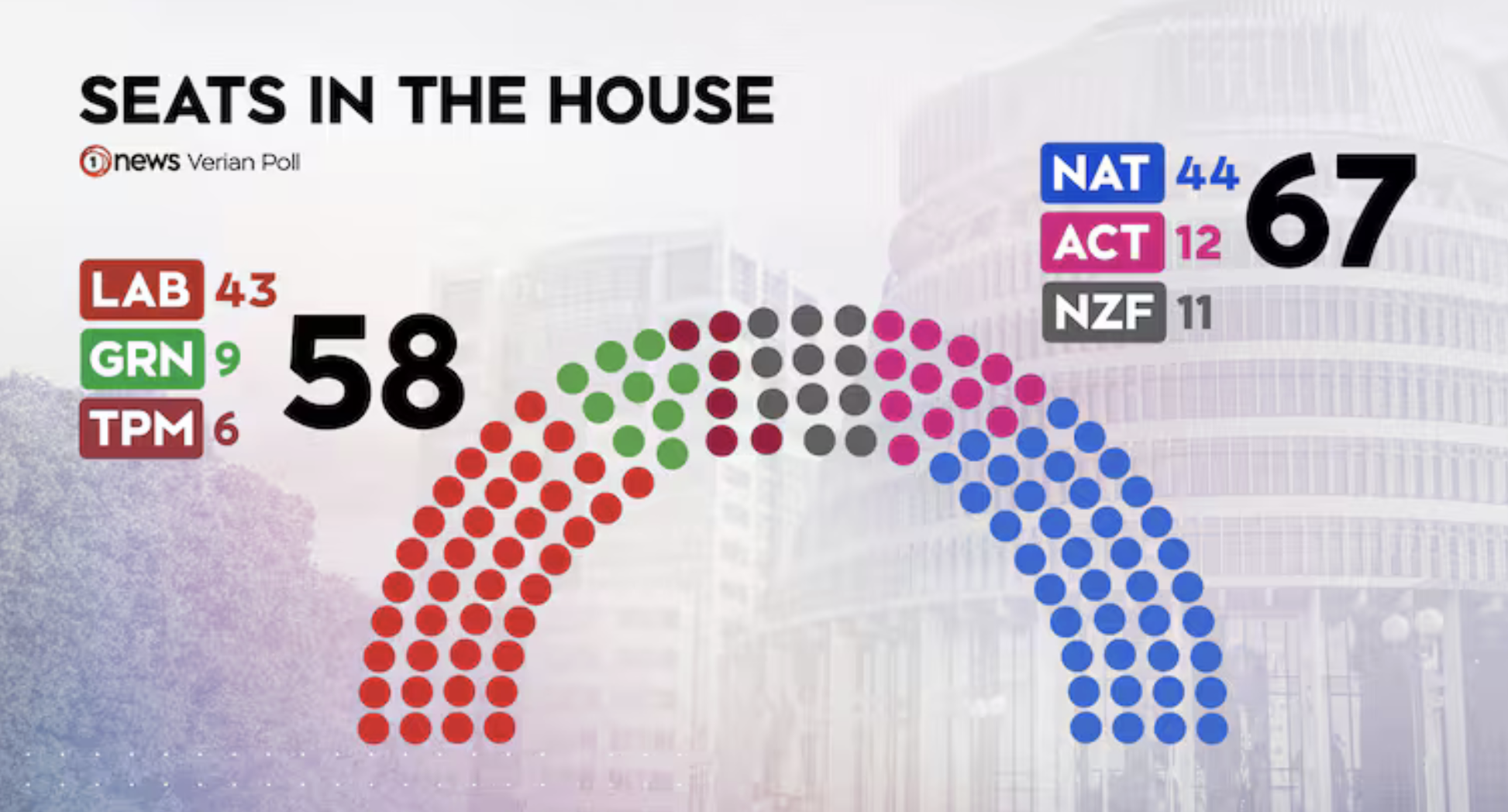
As it stands, the Coalition government would obtain 9 more seats than the left, primarily based on the strength of the minor parties.
Once you add in the voter suppression laws National will pass that historically gives the left 2-3 seats, we are looking at a deficit of 11-12 seats if an election was held today.
In response to it all, I have seen calls of outrage from the left.
Echoes of “fake news” and “fake polls” streamed across social media. The reverberating shock and denial was commensurate to how much each of our sides operate within echo chambers, but also the inability of the left to look out further from “my perch”.
Political strategy inevitably accounts for the whole, and whether we like the results or not, a large part of political accounting is actively seeking out views, realities and perceptions across the political arena.
A large part of my time off the last month entailed testing what it would feel like to not hold any interest in politics, nor have the background or information to vet information. Would my political views change? What does it feel like to be uninterested? How would National’s announcements hit? How would I see David Seymour again? And Chris Hipkins?
Thanks for reading, folks.
The article continues below for paid subscribers