What did Simeon Brown know about NZ's second major health cyber breach?
Canopy Healthcare owned by Luxembourg holding company. Its cyber attack was hidden for 6 months. Plus: National wants councils to increase rates, loosen standards.And Brian Roche's PSC problem etc
Partial paywall
Second Health Major Cyber Attack affects patients
RNZ reveals that private health provider Canopy Health suffered a “major” cyber attack six months ago, but covered it up until after the Manage My Health incident.
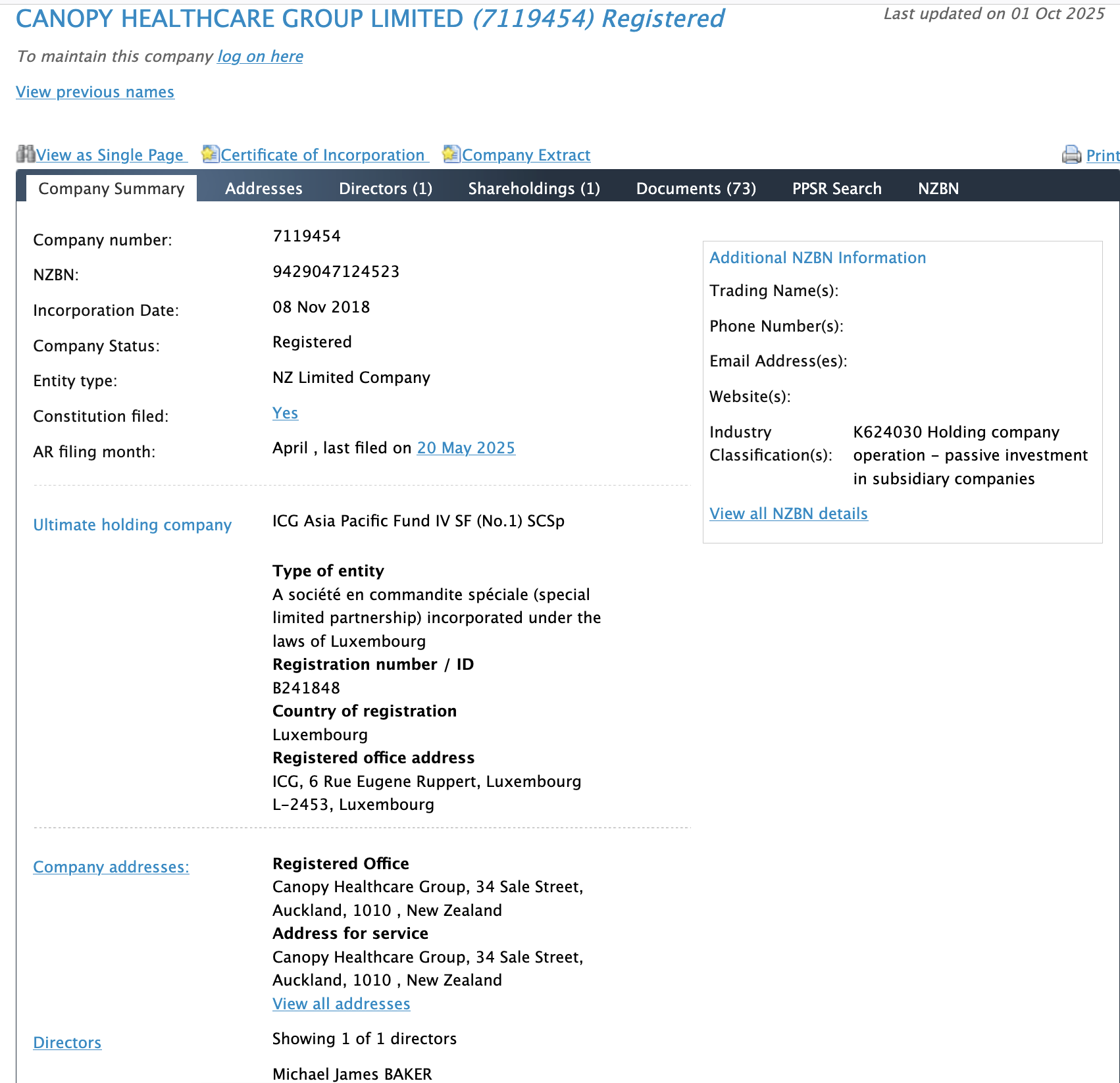
Auckland based Canopy Healthcare runs 24 diagnostic clinics, eight oncology clinics, two private breast surgical centres and a drug compounding business1.
It appears to be owned by a corporate investment holding company based out of Luxembourg with a sole NZ Director, Michael James Baker.
Patients only just received notification of the breach from July 2025, but were none the wiser as to what information was stolen, and if their data was now safe.
Some also pointed out that letters from the company contradict Canopy’s public statements:
…..The email from the company - claiming there was "no indication that any credit card, banking information or identity documents were affected" - appeared to contradict the company's online statement, which noted the hackers may have "accessed a small number of bank account numbers”.
The question has to be if Health Minister Simeon Brown, who originally downplayed the Manage My Health breach, knew about Canopy Healthcare’s cyber incident, and who or what instigated the cover up.
National wants higher user pays, and looser inspection standards from Councils
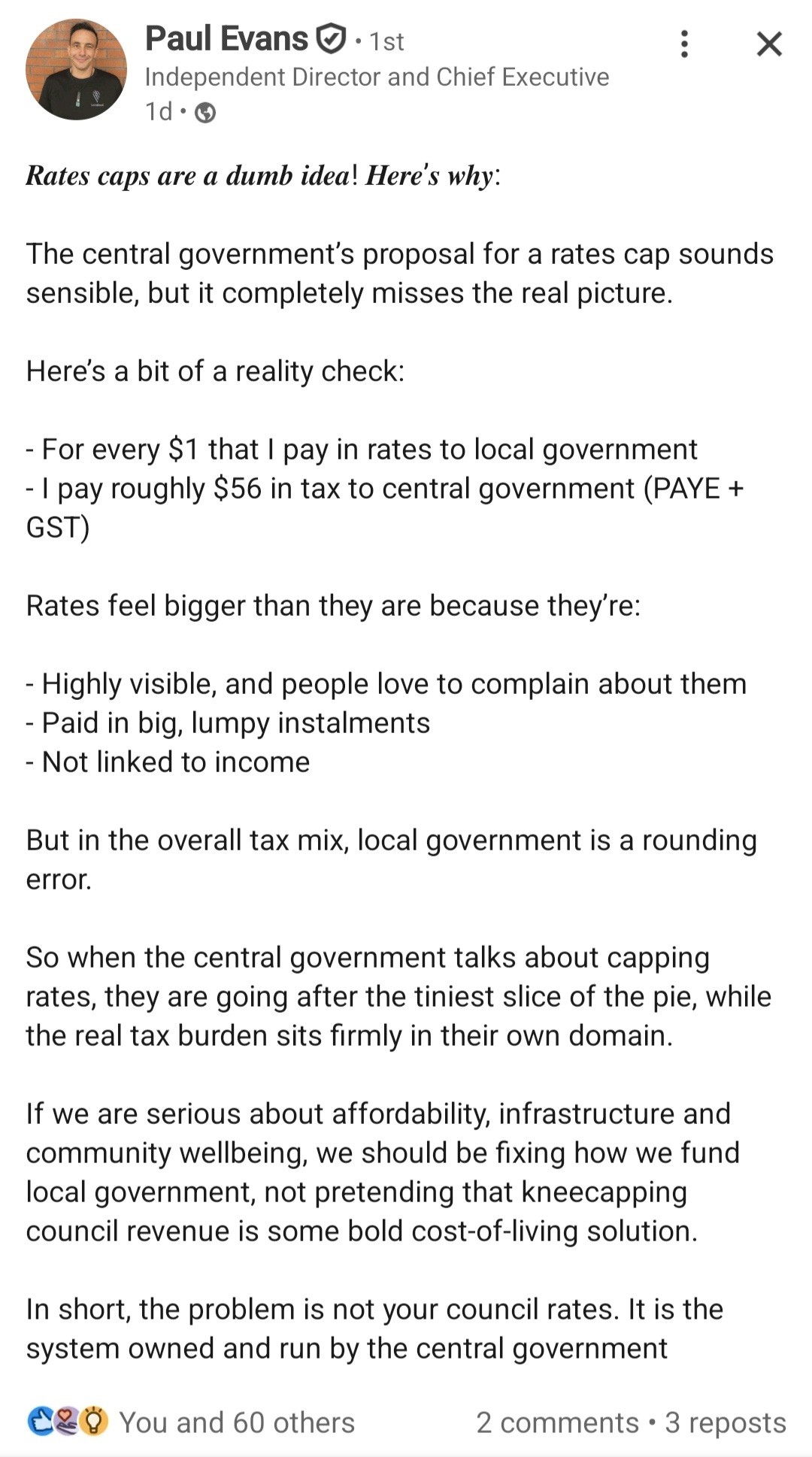
In a Newsroom analysis, Jonathan Milne reveals Simon Watts position on National’s rate cap law:
The rates cap is intended to “incentivise greater use of user charges”
i.e. charge more for services across the board.
This is despite Treasury’s stark warnings that “the real problem (around Council rates} is 35 years of councils underspending in their misguided attempts to keep rates rises to a minimum.”
Treasury also calls out the risk of delaying investment and maintenance, saying it always costs more in the long run and creates “greater intergenerational equity” as later generations pay off that higher debt.
Treasury:
“It is the Treasury’s strong view that successive underspending by local councils over the last 35 years, in the face of pressure to keep rates low and rate rises to a minimum, means that rates are significantly below the level that they need to be in order to be considered sustainable….
…government policies should focus on how to allow rates to rise to sustainable levels.”
In other words, the current rates are not sustainable.