"Young Kiwis are being harmed"
National wants to move the chronically homeless from sight, even as it ignores underlying complexity and drivers. Plus: Chris Bishop called out for his lies - again
Open to all
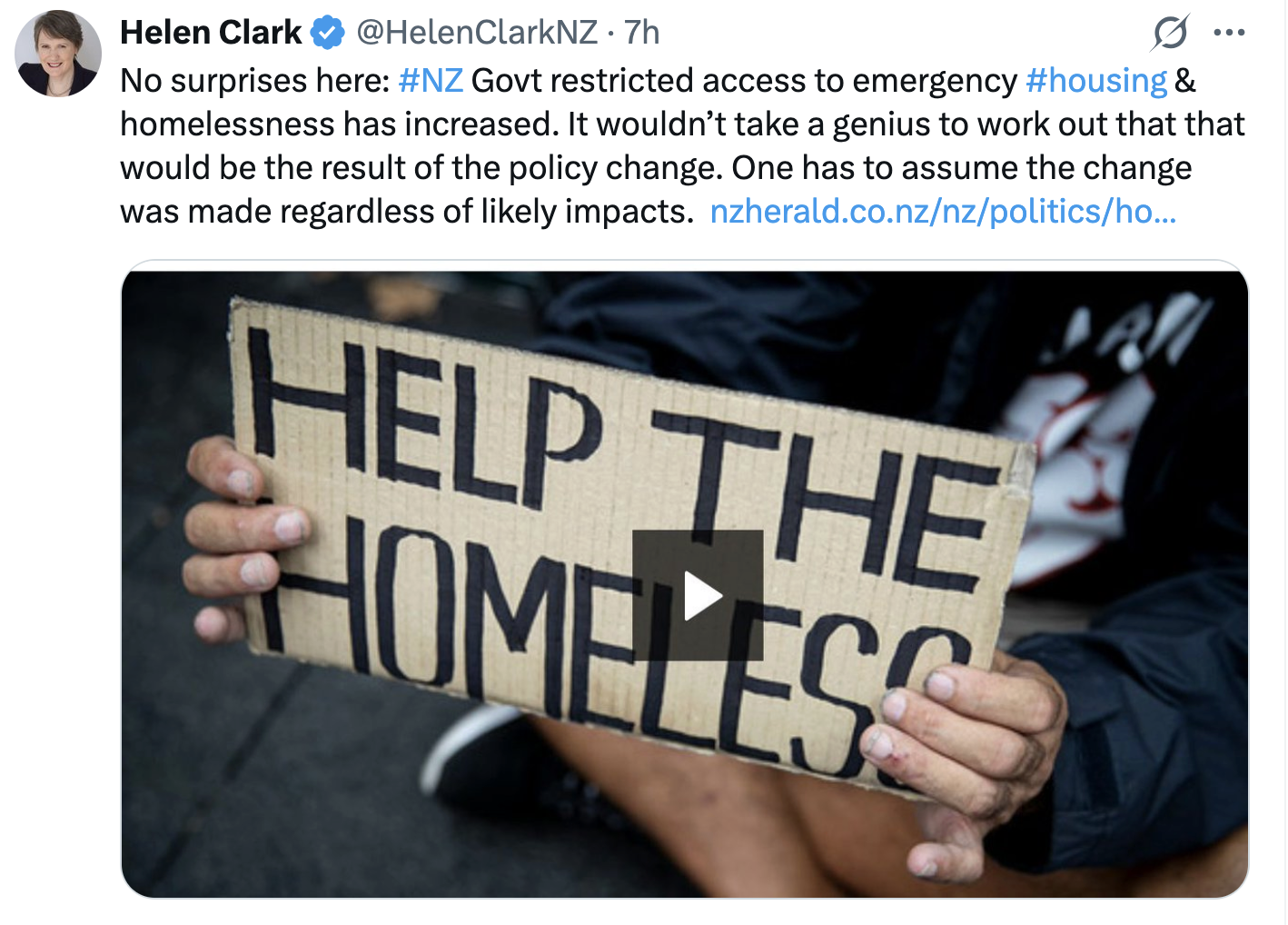
Aotearoa New Zealand’s homelessness issues escalate to crisis levels under National.
Every few months, we see significantly higher numbers..
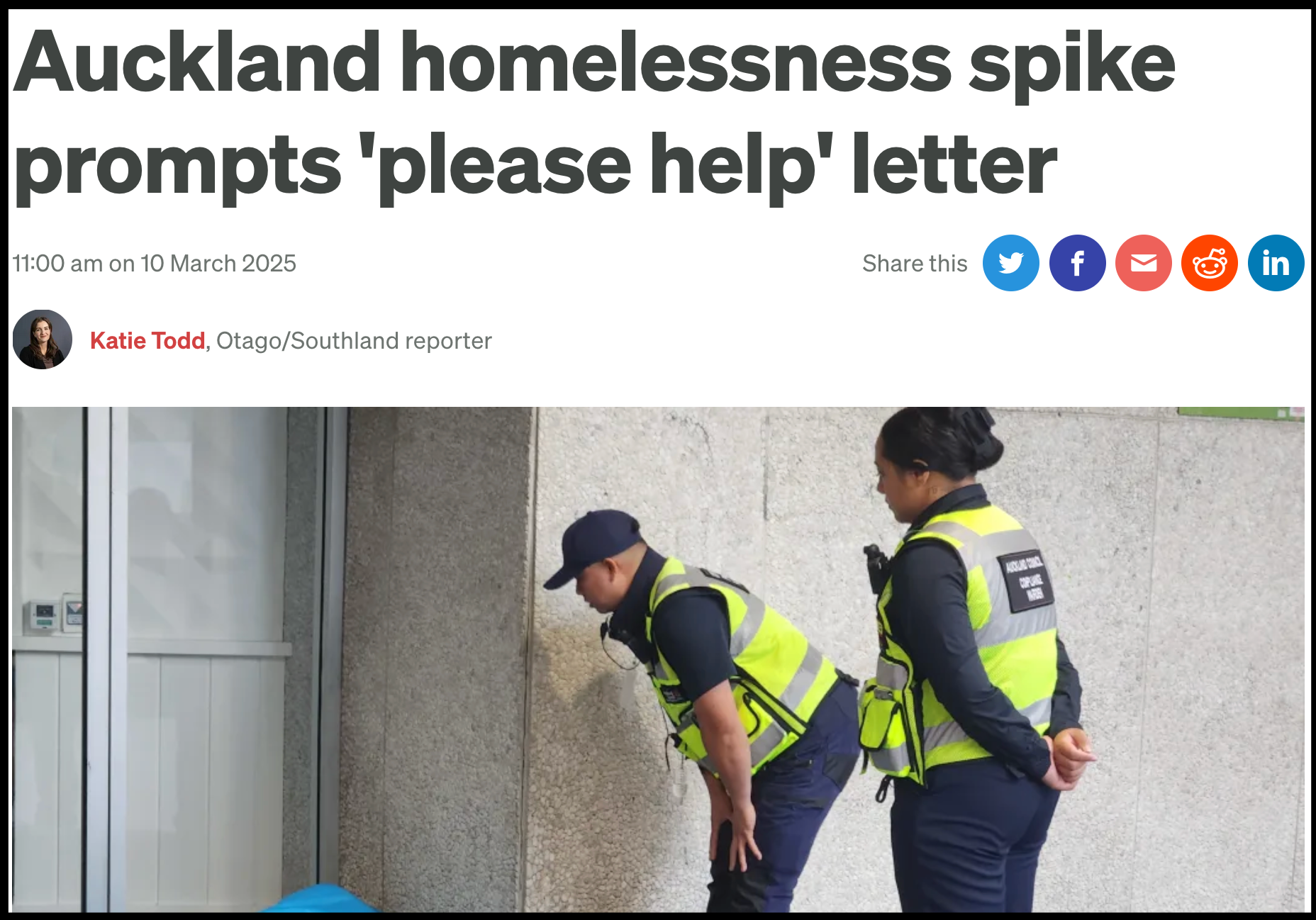
In Auckland, homelessness has spiked from 53% more homeless in March to over 100%1 (that’s double) in just 8-9 months.
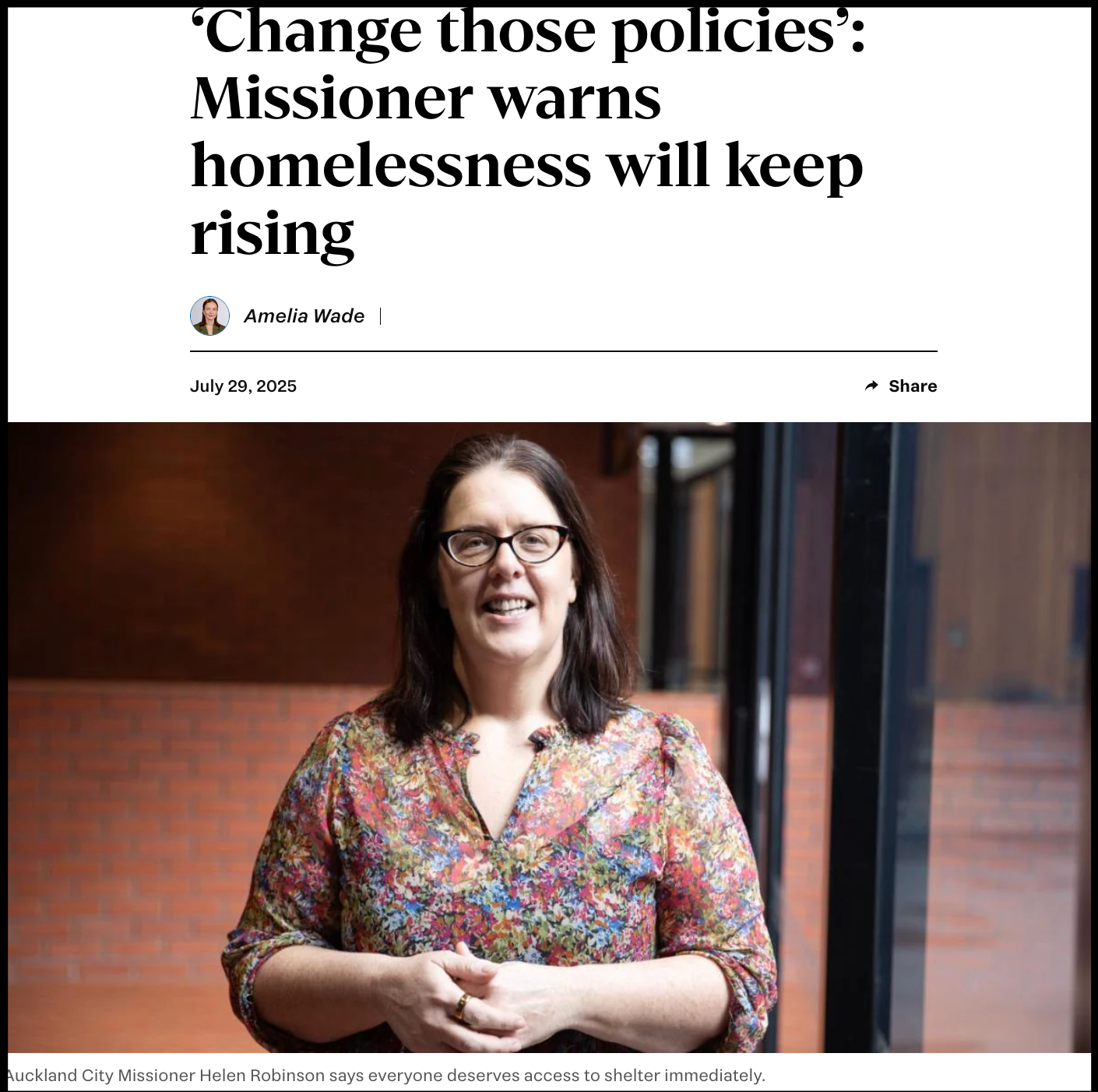
Pleas by Auckland City Mission and Auckland Council for central government to clarify and amend its emergency housing policy has fallen on deaf ears.
Auckland isn’t the only city with the problem.
New Plymouth chronic homelessness is up over 50%, and there were 40% more rough sleepers recorded in Wellington in late 2024 and another 23% spike this year.
In Christchurch, it’s up 73% and there aren’t enough houses to put folks in.
Christchurch Methodist Mission’s Executive Director Jill Hawley didn’t mince her words in May:
“We could count on one hand the number of people who have been offered emergency housing,” she said.
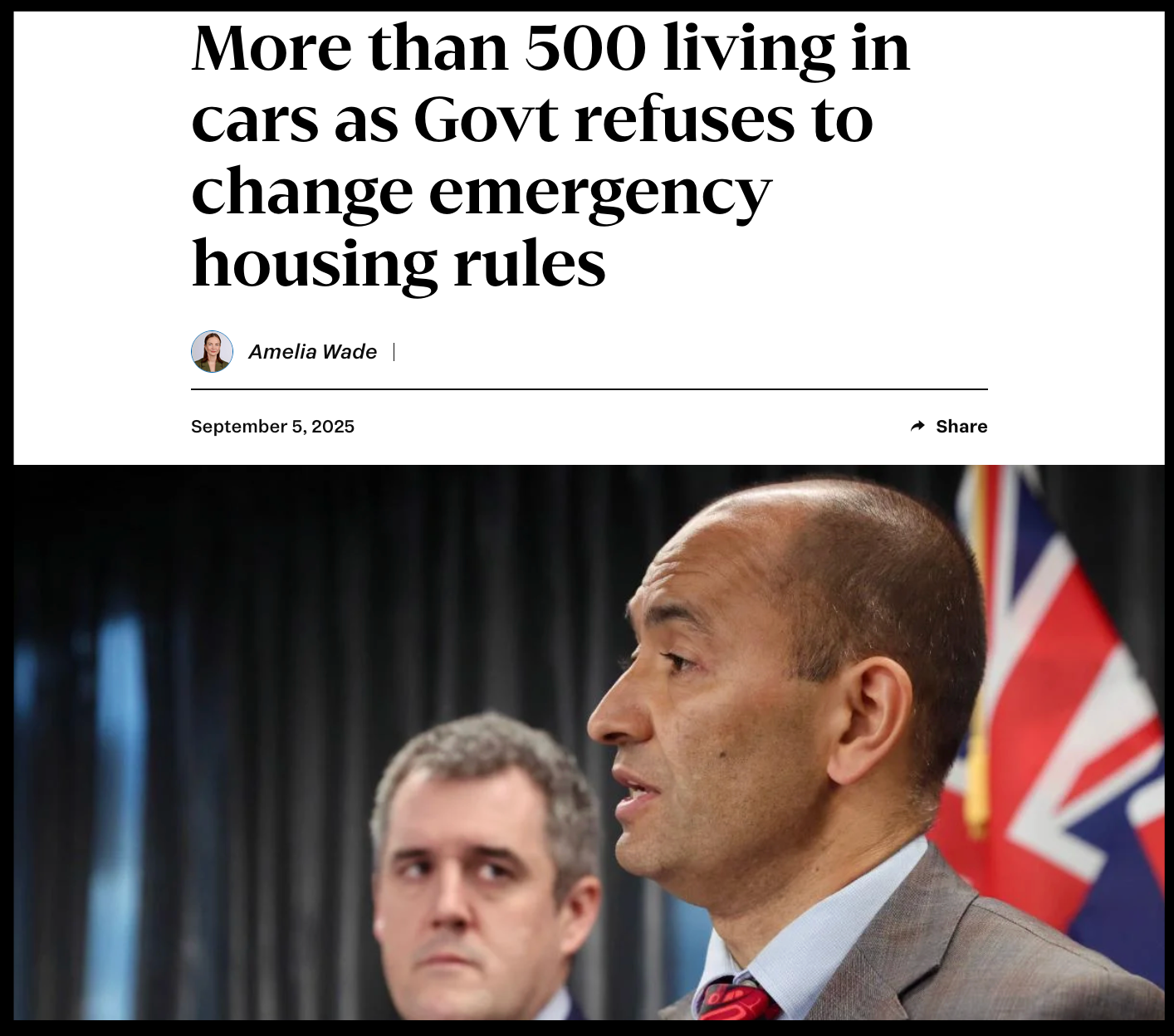
“Chris Bishop said in an interview that if people are homeless they could go to the Ministry of Social Development (MSD) and housing support would be available to them… we know that’s not true.”
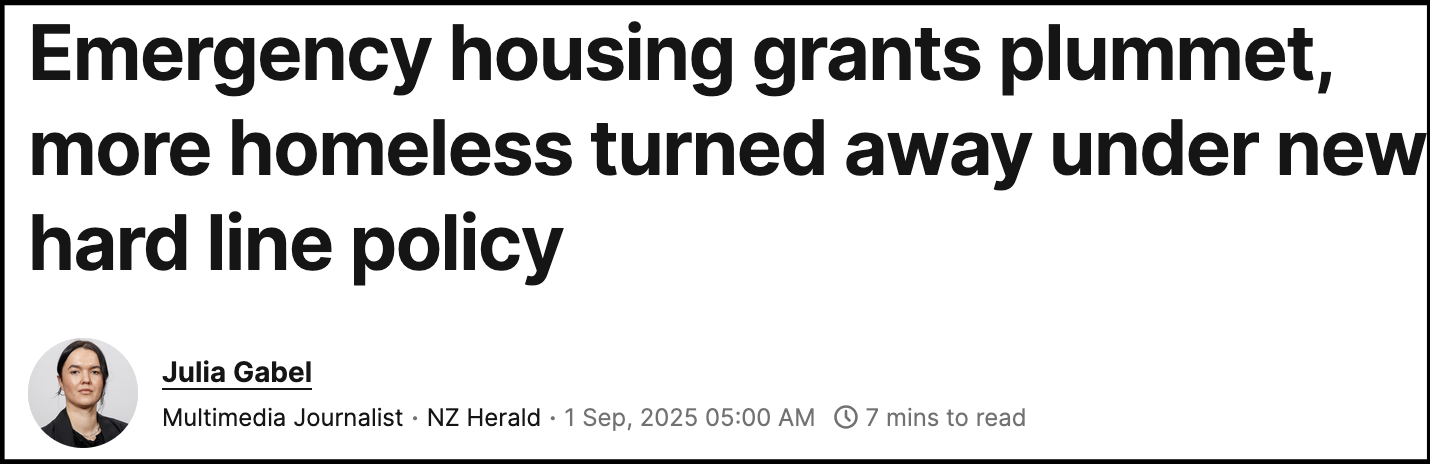
“Most people” are being declined from emergency housing, including domestic violence victims, as National’s hardline policy, aimed to achieve Luxon’s KPIs, takes effect.
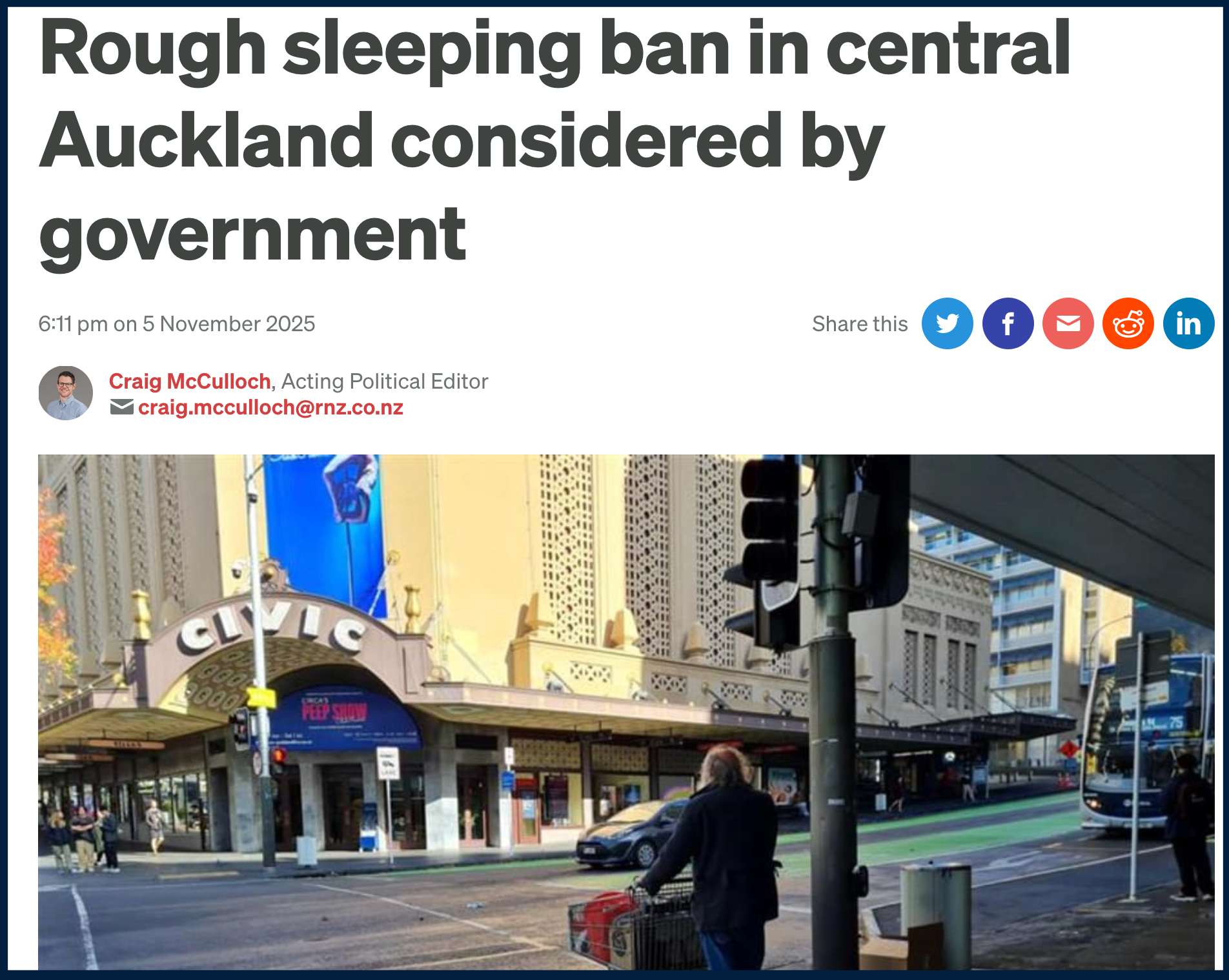
The Government’s response to this has been to push our homeless out of city centres - out of sight, out of mind.
Chlöe Swarbrick called for “calm” in November as Auckland business leaders lobby the government to accelerate the plan:
“[That plan] merely moves the problem along to another place and pops up in another part of the city.”
Swabrick has written to Police Minister Mark Mitchell, inviting him to visit her electorate to “see and understand some of the issues we face first hand”.
“I would just ask that everybody who has an interest and a stake in Auckland city centre calms down. Hysteria is not helping.”
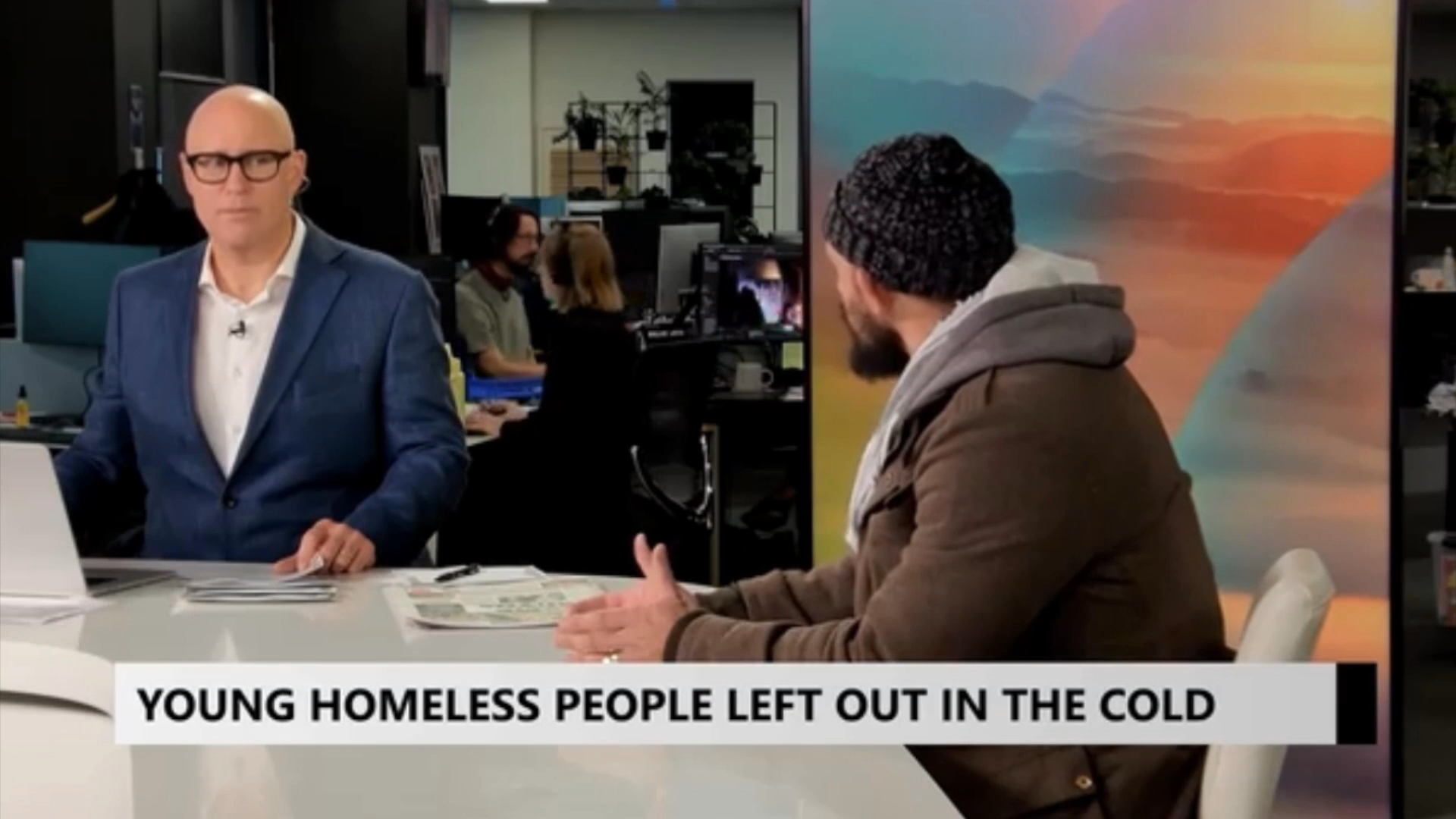
Today’s NZ Herald interview with Auckland Youth Homelessness organisation “Kick Back” on this topic is worth a watch
The transcript is offered below.
TRANSCRIPT
AH: …And often young people who are at that point where they’re facing sleeping on the street, they are coming from situations where they are unsafe, where they do not have safe or stable whānau they can fall back on.
And so the decision the government has made to shut the emergency housing gateway has meant that more of our young people have ended up on the streets, have ended up in situations where their lives are at risk and they are being harmed.
Interviewer: Has it shut the gateway though?
I thought they’ve just sort of, they’ve obviously tightened up on how free they are with the money because we had obviously an awful situation that we saw rise and rise during COVID where more and more people were just being shovelled into emergency housing situations and hotels and motels and places like that, which weren’t ideal either.
So have they tightened things or are they literally just...
AH: Our experience and that of many of my colleagues in the sector, and specifically our young people, what they are telling us is that when they go into working income and they request that support, they are being denied and they are not getting support.
We’ve got to ask what is the criteria for young people to be able to access emergency housing when they are telling us we are sleeping on the street, our lives are at risk, we are in danger, and they’re being told no.
What do we want that there for?
Interviewer: So, look, the numbers that we’ve seen in the ..story today talks about the data at the end of June showing the number of applications have dropped significantly,which shows that we are sort of seeing a drop-off in demand as well, yeah?
We are slowly fixing this problem.
AH: Look, I mean, we would contest that.
What we are seeing is more and more young people turning up in need of emergency housing, in need of support and shelter.
Our concern is that when young people are going and getting [applying for] that support, they are not getting it.
And the message of getting out into the community that there is no support, you cannot get it.
Interviewer: Yeah. And literally, there’s no network, there’s no relatives, there’s no friends, there’s no places that people can turn up to if they’re in a tight spot?
AH: Look, what Kickback does, our role, is we support young people to explore every opportunity.
And where we can get young people to return to whānau and support the whānau, that is always our first goal.
But there is a group of our young people who are at high risk who do not have those safe networks that they can go to.
And without emergency accommodation, without, you know, an alternative to emergency accommodation, they’re ending up in a very dangerous situation.
Interviewer: Is this a new problem, though?
AH: It’s a problem that has gone on for a very long time, but it has gotten worse.
And the government’s decisions over this period have increased the risk of young people seeking support and being denied that support.
Interviewer: So we’re talking to the Prime Minister a little bit later this morning.
If you had a quick fix, there probably isn’t one I’m guessing, but if you had some suggestions to make, what would be yours, given all the constraints that they face?
AH: Look, there’s some things that the government could do right now.
- One is they could roll back the emergency housing policy.If someone is at risk and their life is at risk and they need shelter, they should be able to access it.
- Two, they could immediately start to resource and fund an alternative model to the motel-based modelWe agree that the motel-based model has not worked, it has caused harm, but instead of replacing that model, essentially the door has been shut and people have been harmed as a result.
- Three, they could … start to implement duty to assist legislation.So legislation that would ensure that if someone turns up at work and income, that the state’s role is clarified and that those people can get support and should be able to get as much support as the government has to ensure that people do [not] sleep on the street.
Interviewer: Is it just a money issue, do you think?
AH: Look, it’s both structural….
We need to ensure we have the right kind of mechanisms within the law to protect our rights.
So that’s where the duty to assist legislation comes in.
But also it is resourcing.
You know, we need to ensure that we have the right services in place to support people when they are in crisis.
And right now, we are not doing a good enough job.
Interviewer: It’s probably not just the only problem, right, homelessness?
There’ll be other issues going on there.
So is just giving people a roof over their heads going to be the end of it, though?
AH: Look, that’s, I mean, that’s a pretty good place to start, right?
You know, housing is a basic human right and shelter is a basic human need.
You know, human beings and our young people, our children, need to be inside.
They need to have a roof over their head.
It was pouring rain last night.
Can you imagine sleeping out in that?
There are kids out in the rain because of the decisions the government has made.
And so yes we do need to start with shelter we do need to start with housing but of course there’s a lot of complexity in terms of mental health and addiction and disabilities and harm and that is why we need to ensure that our people and our children have access to a place to live and a place to stay when they are in crisis, when they don’t have anywhere else to go.
Interviewer: I guess that point, though, about not having anywhere else to go is what I can hear some people will be screaming at the TV or screaming at the screen today.
It’s like, where are the families in this?
Where are the supporters?
Where are the adults in these people’s lives who could be offering them some sort of [help]?
AH: In some cases, some of the children, the young people that we care for, the parent essentially is the state.
These are kids that have been uplifted from birth, have been in state care for most of their lives, and have experienced homelessness for most of their lives, and they have never had adequate care.
The responsibility here sits on the government and on the Prime Minister to ensure that every child that is awarded the state, that their parental responsibility is upheld and they are looked after.
Now, for those kids that aren’t within state care, there is often a lot of complexity.
But the question we have to ask as New Zealand is, do we want to have this debate around who’s responsible?
Do we want to ensure that our children are housed and that they are looked after and they are inside rather than in the rain?
We can make the decision to ensure that all of our kids, all of our young people have a safe place to live and safe shelter over their heads when they are in a point of crisis, or we can argue about who’s responsible.
Video source: ‘Hopelessness and desperation’: The impact of new emergency housing policies on those at the coalface
Related Reading:
 Mountain Tūī
 Mountain Tūī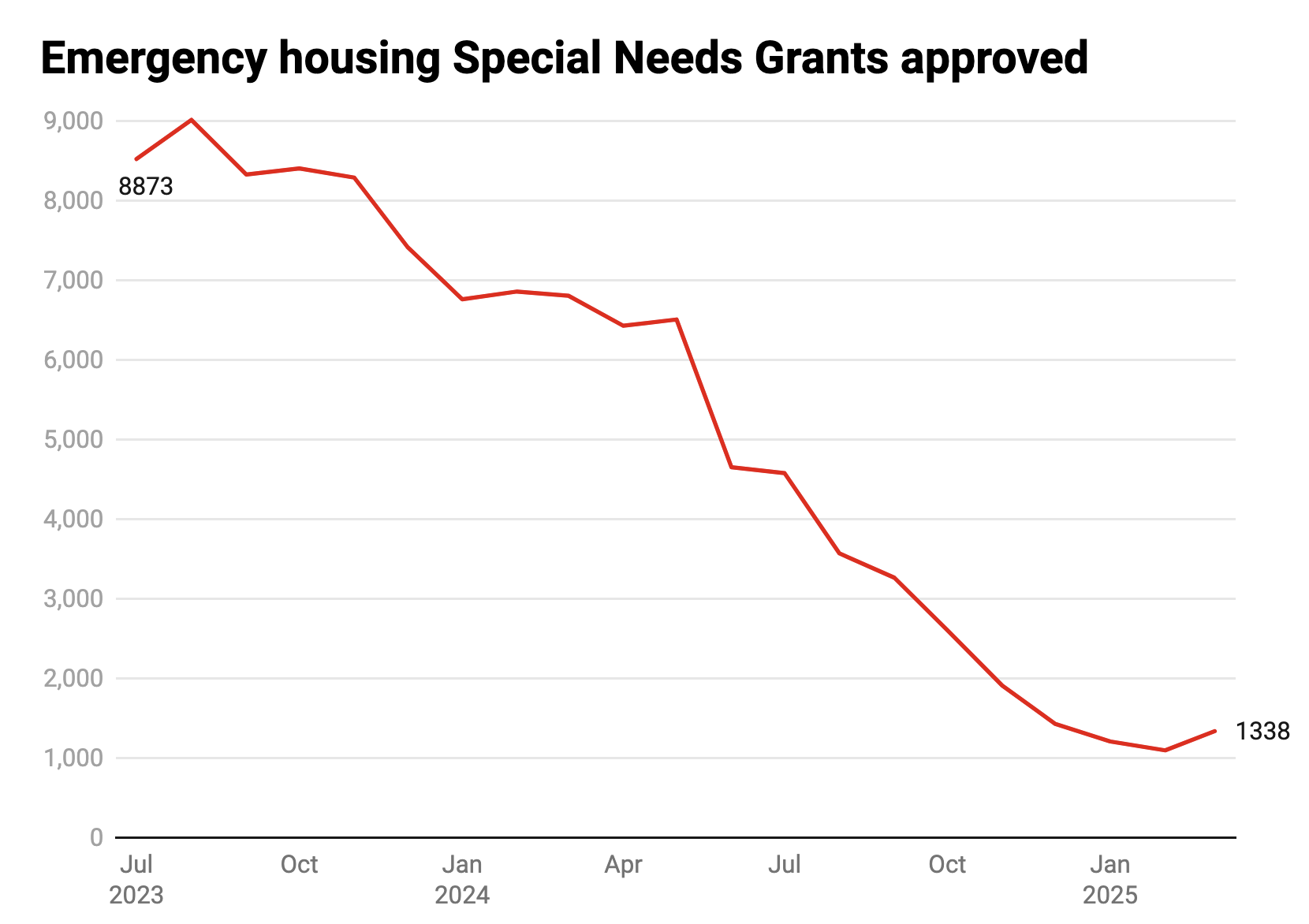
 Mountain Tūī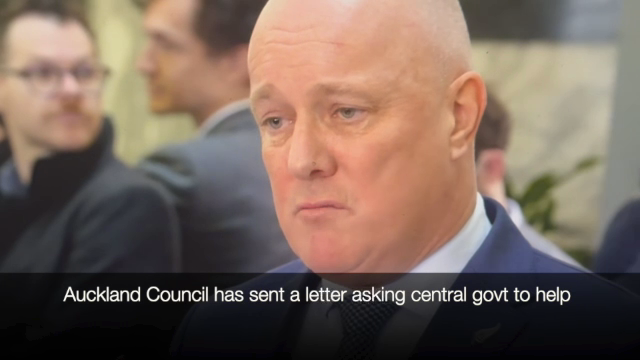
December 2025 ↩